How Many Restrooms Does a County Fair Need in Arcadia?
Fair attendance swings hour to hour, so the math is different from a construction site. OSHA's 1926.51(c) toilet ratios were built for a fixed crew working an 8 hour shift, not a gate that lets in 3,000 people over an afternoon. We use crew-style numbers as a floor and add units for peak crowd surges, beer gardens and food courts. A fair with several thousand daily visitors typically needs a mix of standard portable toilets, at least one ADA accessible unit per cluster, and a bank of handwashing stations near food vendors. ADA Standards section 213.2 requires at least 5 percent of any clustered group of single-user units to be accessible, and never fewer than one, so a bank of 20 units needs one accessible unit minimum. Grouping restrooms in clusters near entrances, stages and food rows cuts walk time and keeps lines from backing into pathways. If your fairground sits near Arcadia and you're comparing sites, we also serve grounds close to Temple City, 3.3 miles southwest, and Monrovia, 5.1 miles northeast, so multi-day logistics don't change much by location. Use our how many porta potties do I need guide to run the numbers for your specific gate estimate before you finalize a layout with the fair board.
What Restroom Setup Works Best for a Multi-Day Fair?
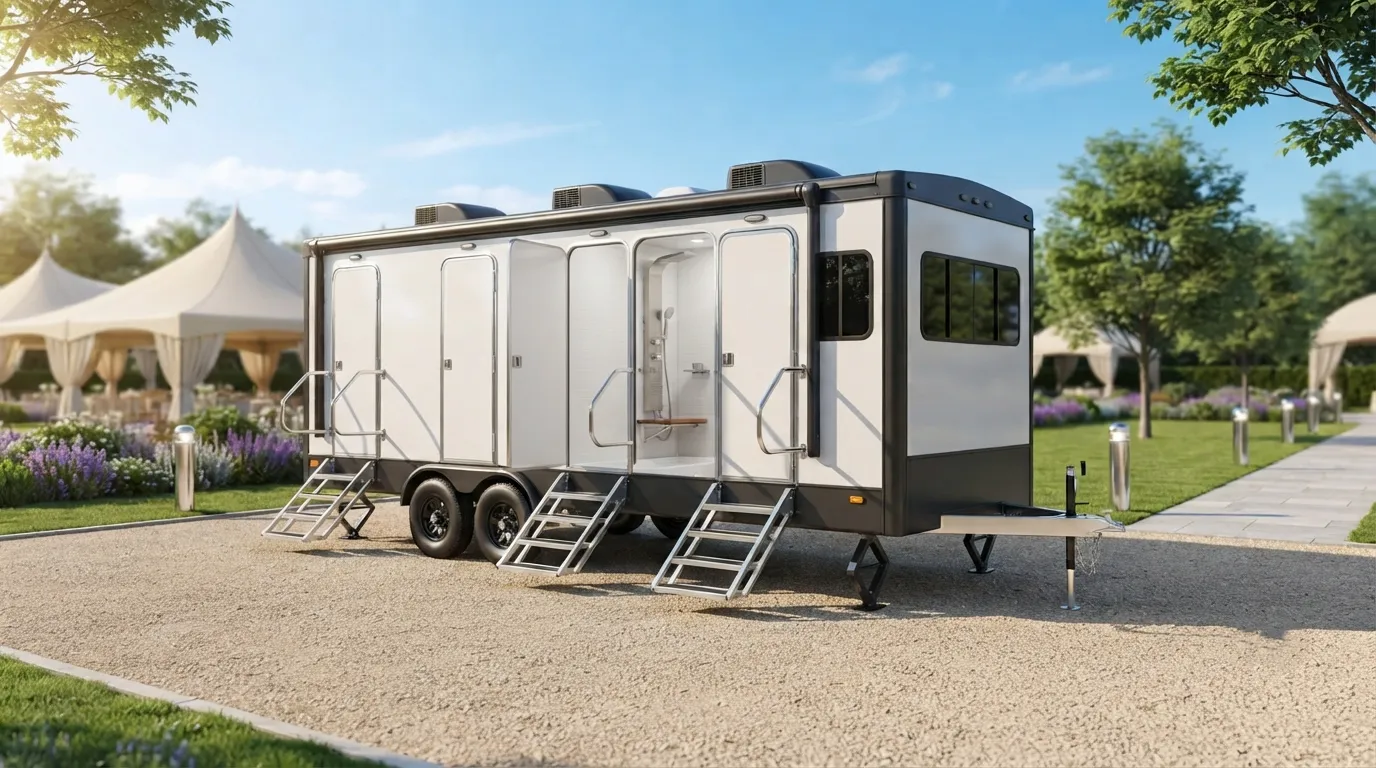
Multi-day fairs take more abuse than a single weekend event, so the setup has to hold up to heavier daily traffic and repeat servicing. We pair standard units, each with a 60 to 70 gallon holding tank and a footprint of about 44 by 48 inches, with higher-comfort deluxe flushable units near VIP areas, sponsor tents or grandstands. For fairs expecting families with strollers and elderly attendees, a restroom trailer gives more room to maneuver; ADA Standards call for a 60 inch turning circle inside accessible stalls and a minimum 32 inch clear door opening, both of which a trailer unit accommodates more easily than a single stall. Larger fairs with grandstand seating or a midway often do better with an 8 stall restroom trailer instead of scattering dozens of single units, since it consolidates servicing into one stop instead of forty. We also stage handwashing station rental units at every food row entrance and exit, since fair food vendors handling raw ingredients and fryers create the kind of contact concerns that keep hands needing a wash between tasks. Under 29 CFR 1910.141(d)(2), washing facilities need actual soap and towels or a hand-drying device, not just sanitizer, so we stock accordingly. Fencing off the service corridor behind restroom clusters with temporary fencing keeps foot traffic from blocking pump trucks during a mid-day service run.
Why Should Arcadia Fair Organizers Book Restrooms Early?
Fair season books restroom inventory fast, and county fairs compete with weddings, festivals and construction jobs for the same fleet. Booking 60 to 90 days out gives us room to plan delivery routes, since a roll-off or trailer delivery needs about 60 feet of straight clearance behind the truck, which some fairground access roads don't have without a walkthrough first. We coordinate with fairground staff on placement so units sit on stable, level ground, consistent with ADA Standards section 302.1 requiring firm, slip-resistant surfaces at accessible units. Early booking also means we can staff a servicing schedule that matches your actual gate hours instead of a generic once-a-day sweep. ANSI/PSAI Z4.3 sets a baseline of one service visit per week for units seeing light use, but a busy fair midway sees closer to that volume in a single day, so we schedule multiple visits during peak hours instead. If your fair includes a beer garden or overnight security tent, we can also spec a roll-off dumpster or two for vendor waste and a light tower for the restroom corridor after dark. Arcadia fairs with vendor booths often add portable sink rental units near food trucks too. Check our porta potty rental checklist before you finalize your site map with the fairground.
How far in advance should I book restrooms for a county fair?
Book 60 to 90 days ahead for a multi-day fair. That window lets us plan delivery clearance, staff extra service runs during peak hours, and confirm accessible unit counts before the fairground finalizes its site map with vendors and stages.
Do I need ADA accessible units at a fair?
Yes. ADA Standards section 213.2 requires at least 5 percent of any clustered restroom bank to be accessible, with a minimum of one unit. Fairs with several clusters need at least one accessible unit per cluster, not just one for the whole grounds.
Can Arcadia Porta Pros service restrooms during fair hours?
Yes. We schedule mid-day and evening service runs during peak fair hours instead of a single daily sweep, since attendance spikes push tanks past standard use faster than a typical work shift would.
What is the difference between standard and deluxe units for a fair?
Standard units cover general midway traffic at lower cost. Deluxe flushable units add a nicer interior and flush feature, usually placed near grandstands, sponsor tents or VIP areas where organizers want a step up from the standard fleet.
Should we add handwashing stations near food vendors?
Yes. Food rows need dedicated handwashing stations under 29 CFR 1910.141(d)(2), which requires soap and towels or a hand-drying device. Place them at both entry and exit points of each food vendor row.
Next step
Get a delivery date
Tell us the address, the dates and the headcount. We size the order and confirm the route.